
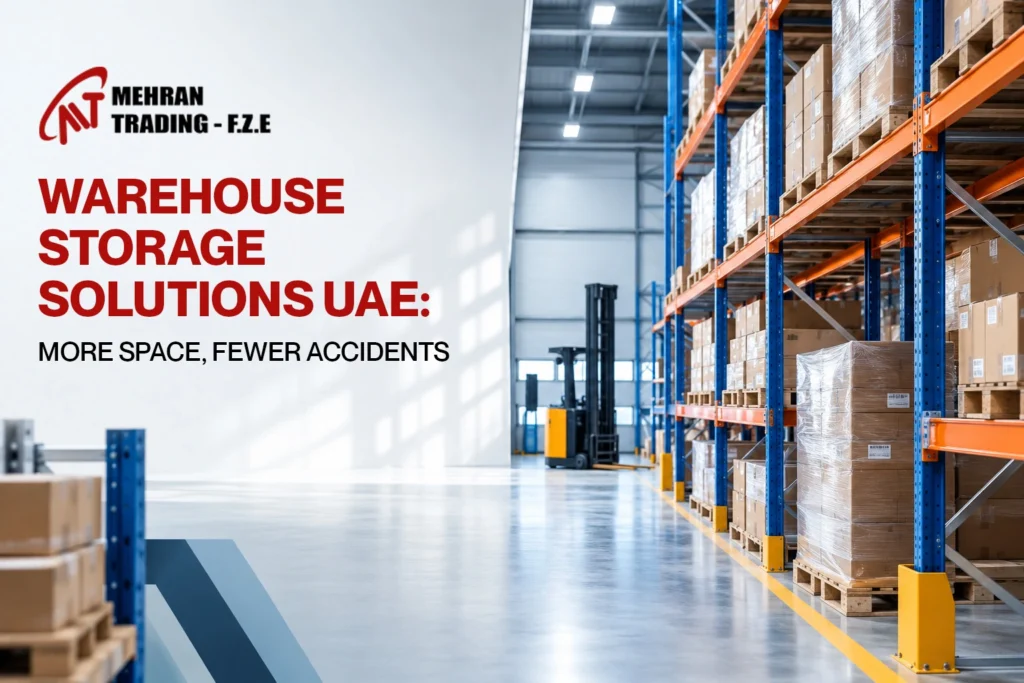
Walk into a busy warehouse in Al Quoz or Ajman. You’ll often see pallets stacked on the floor and a forklift squeezing past boxes. Above everyone’s head sits six metres of empty air. The building isn’t too small. It’s just not set up right. That’s where proper warehouse storage solutions come in.
Which Storage System Suits Which Job?
Good warehouse storage systems follow your stock, not the other way around.
Got mixed pallets that each need their own spot? Go for selective racking. It’s the most common of all pallet racking systems. Every pallet can be reached without moving another.
Storing pipes, timber, or steel bars? Cantilever racking has open arms with no front posts, so long items slide straight on.
Picking cartons by hand? Long-span shelving is the usual choice. For spare parts and tools, heavy-duty shelving takes the weight. And for a small store or office, bolt-free shelving goes up in minutes with no nuts or bolts.
Out of floor space altogether? Mezzanine storage systems add a second deck inside the same unit. With a high enough ceiling, that’s close to double the usable area.
Shelving or Pallet Racking: What’s the Difference?
It comes down to who lifts the goods.
- Warehouse shelving is for people. Staff reach in and grab cartons, bins, or loose items.
- Pallet racking is for forklifts. Full pallets sit on steel beams, sometimes five or six levels up.
Most sites we visit end up with both. Bulk stock lives in warehouse racking systems at the back. Fast picks sit on shelving near the loading bay.
Choosing the Right Industrial Shelving System
- Weight first. A shelf full of paper files is one thing; a shelf full of car batteries is another. Heavier goods need heavy duty storage racks with thicker uprights and stronger beams.
- Then think about movement. Using forklifts? Plan your aisle widths around the truck.
- Leave room to grow. Industrial storage racks that can take extra bays later will save you a second project in two years.
What to Check Before You Buy Racks
We always run through a short list before quoting any warehouse storage equipment:
- How heavy is your heaviest pallet? Racks are rated per level, so this number decides the beams and frames you need.
- How high can your forklift reach? A 9-metre rack is useless with a 6-metre mast.
- Can your floor support it? Some older slabs can’t carry tall, loaded racks.
- What protects the uprights? Frame guards and safety barriers cost little. A bent upright costs a lot.
- Who’s fitting it? Proper warehouse racking installation means level, anchored, and inspected racks.
Sort the Layout Before the Steel Arrives
The best rack in the wrong place is still a problem. Warehouse layout optimization puts fast movers near dispatch. Slow stock goes at the back.
Warehouse space optimization takes it further by using height. Warehouse rents in Dubai have risen sharply in recent years. Building up is often cheaper than moving out.
Talk to Mehran Shelving
We’ve been designing, making, and installing racking in the UAE for more than 14 years from our base in Ajman. We supply pallet racking, cantilever racking, long-span shelving, and bolt-free shelving. We build mezzanine floors too. Call us on +971 56 632 5668 or send email info@mehranshelving.com to book a site visit and we’ll suggest a layout.
FAQs
Q1: What’s best for a small warehouse?
Long-span or bolt-free shelving for hand-picked stock. If you’ve got pallets, use selective racking.
Q2: Will a mezzanine really double my space?
Close to it, if your ceiling is high enough.
Q3: Can I install racks myself?
We wouldn’t recommend it. Racks need to be level and bolted to the floor, or they can fail under load.
Q4: How often should racks be checked?
Look for bent uprights or loose beams every few weeks. A yearly professional inspection is a good habit too.